Full container load (FCL)
You take the whole box. Cheaper per unit once you are filling most of it, and the container is sealed at origin and not opened again until customs or your gate.
FCL and LCL movements with carrier selection, origin coordination, documentation, customs and inland delivery joined into one operating plan.
 Sea Freight
Ocean is how most of what we move travels. We book with the carrier, hold the rate we quoted you, and stay on the file until the container is off the ship and cleared.
The bulk of our volume runs from China into the western Indian ports and up to the northern inland depots. We handle other origins, but this is the lane we know best — which carriers hold schedule on it, which consolidators are worth using, and where the delays usually start.
Internal dimensions are the ones that matter when you are planning a load. External figures are what fits on a chassis; internal is what fits your cargo.
| Container | Internal L × W × H | Max payload | Capacity |
|---|---|---|---|
| 20ft standard | 5.90 × 2.35 × 2.39 m | ~28,000 kg | ~33 CBM |
| 40ft standard | 12.03 × 2.35 × 2.39 m | ~26,500 kg | ~67 CBM |
| 40ft high cube | 12.03 × 2.35 × 2.69 m | ~26,500 kg | ~76 CBM |
| 45ft high cube | 13.56 × 2.35 × 2.69 m | ~26,000 kg | ~86 CBM |
| 20ft reefer | 5.45 × 2.29 × 2.27 m | ~27,000 kg | ~28 CBM |
| 40ft reefer HC | 11.58 × 2.29 × 2.50 m | ~25,000 kg | ~66 CBM |
| 40ft open top | 12.03 × 2.35 × 2.35 m | ~26,500 kg | roof removable |
| 40ft flat rack | 12.06 × 2.40 × 2.14 m | ~39,000 kg | no sides |
Figures are typical for the equipment types in general circulation. The actual plate on the container you are allotted is what counts, and we send you those details once the box is nominated.
Payload is also capped by road limits between the port and your gate, which in practice is often the tighter constraint.
You take the whole box. Cheaper per unit once you are filling most of it, and the container is sealed at origin and not opened again until customs or your gate.
Your cargo shares a container with other shippers. You pay on volume, with a weight break that can override it. Below roughly 15 CBM this is usually the cheaper answer; above it, price both before deciding.
Temperature controlled, for pharma, food and some chemicals. Pre-trip inspection before loading and a set point monitored in transit. A reefer that drifts out of range is a write-off, not a delay, so this equipment gets checked rather than assumed.
Open tops for cargo that loads from above, flat racks for anything wider or taller than a box. Lashing and securing is surveyed before the vessel sails.
The corridors below are the ones we run most often. Transit is port-to-port sailing time on a direct service; a transhipment leg or a blank sailing will extend it, which is why we quote a range rather than a date.
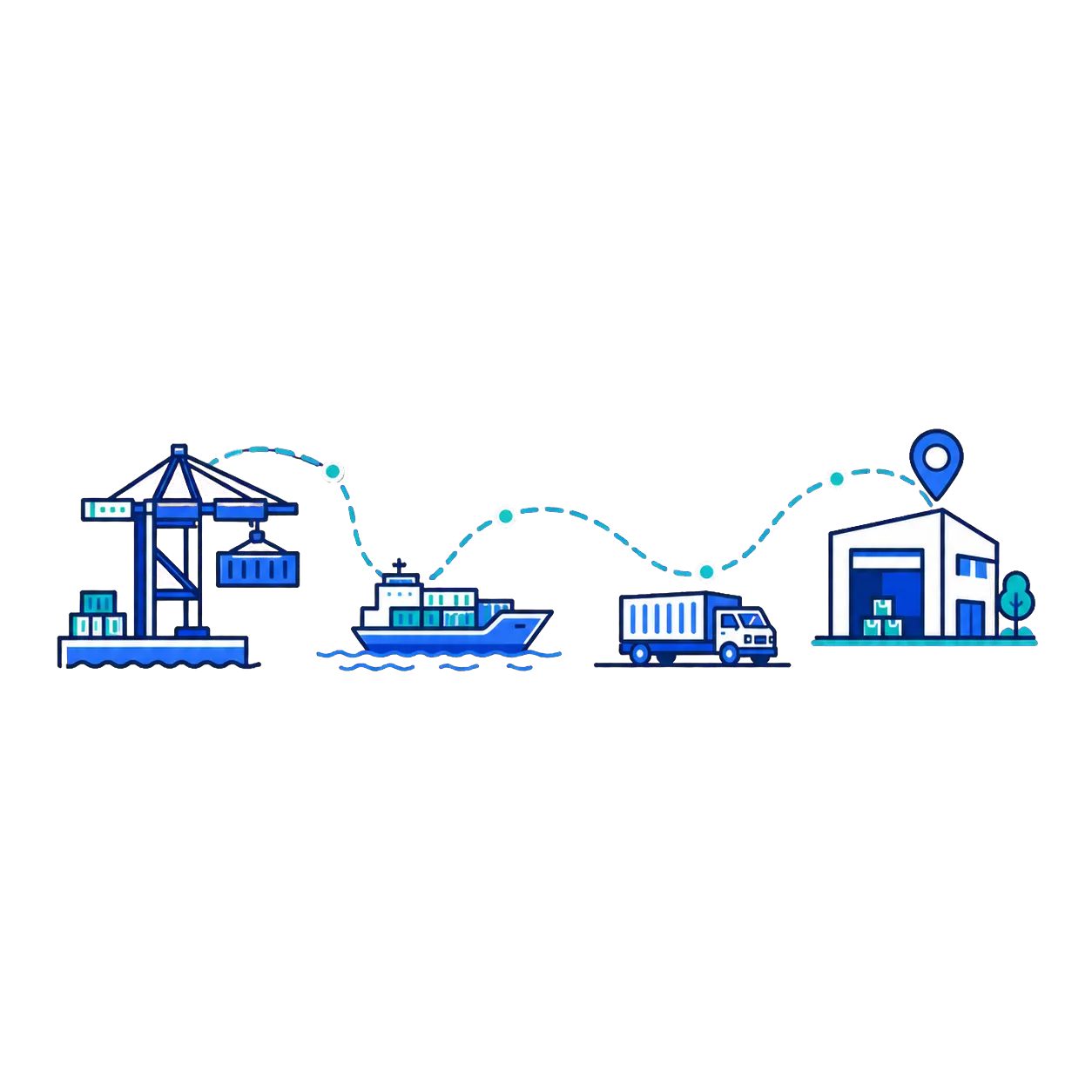
From Nhava Sheva or Mundra we move the container inland by road or rail, including to the northern ICDs serving Punjab. That leg is planned with the sea leg rather than arranged after arrival.
We confirm space and the rate, and give you the cut-off dates for documents and VGM.
Cargo is collected or received at the warehouse, loaded and sealed. For LCL it is consolidated with other cargo.
Departure and arrival milestones update on your VSS Nexus login as the carrier reports them.
Bill of entry filed, duty paid, examination if the shipment is selected for it.
Road or rail to your gate, with free days tracked so detention does not creep up quietly.
Usually below about 15 CBM, but it depends on the lane and the weight. We price both when you are near the line, because the LCL charges at destination can close the gap.
Whoever caused the delay, in practice. Demurrage runs while the container sits in the port; detention runs while you hold the container outside it. We tell you the free days at booking and warn you before they expire.
Yes, and it is common on the China lane. We work directly with them on documents and packing so the first shipment does not become an education at your expense.